Showing posts with label 2014. Show all posts

Monday, December 1, 2014

MAA Cyber Monday Sale: 35% off Books, 15% off eBooks


Treat Yourself to a New MAA Book


For one day only, receive 35% off MAA books! Visit the MAA Store and enter the code CYBMON14 during checkout.


Prefer an ebook? Visit the MAA eBooks Store and enter the code 356839621 to receive 15% off your ebooks purchase.

Hurry! Sales end at Midnight PST.

Friday, November 7, 2014

New: Doing the Scholarship of Teaching and Learning in Mathematics

Doing the Scholarship of Teaching and Learning in Mathematics

Jacqueline M. Dewar and Curtis D. Bennett, Editors

The Scholarship of Teaching and Learning (SoTL) movement encourages faculty to view teaching “problems” as invitations to conduct scholarly investigations. In this growing field of inquiry faculty bring their disciplinary knowledge and teaching experience to bear on questions of teaching and learning. They systematically gather evidence to develop and support their conclusions. The results are to be peer reviewed and made public for others to build on.

This Notes volume is written expressly for collegiate mathematics faculty who want to know more about conducting scholarly investigations into their teaching and their students’ learning. Conceived and edited by two mathematics faculty, the volume serves as a how-to guide for doing SoTL in mathematics.

The four chapters in Part I provide background on this form of scholarship and specific instructions for undertaking a SoTL investigation in mathematics. Part II contains fifteen examples of SoTL projects in mathematics from fourteen different institutions, both public and private, spanning the spectrum of higher educational institutions from community colleges to research universities. These chapters “reveal the process of doing SoTL” by illustrating many of the concepts, issues, methods and procedures discussed in Part I. An Editors’ Commentary opens each contributed chapter to highlight one or more aspects of the process of doing SoTL revealed within. Toward the end of each chapter the contributing authors describe the benefits that accrued to them and their careers from participating in SoTL.

The final chapter in the volume, the Epilogue, represents a synthesis by the editors of the contributing authors’ perceptions of the value of SoTL. This volume has two goals: to assist mathematics faculty interested in undertaking a scholarly study of their teaching practice and to promote a greater understanding of this work and its value to the mathematics community.


Purchase your copy today at the MAA eBooks Store.

Friday, October 3, 2014

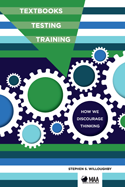
Tom Sinclair Reviews Textbooks, Testing, Training: How We Discourage Thinking

Tom Sinclair reviewed Textbook, Testing, Training: How we Discourage Thinking by Stephen S. Willoughby as part of MAA Reviews.

"This short book recounts many specific true stories from my fifty-nine years of teaching that I believe cast some light on what is wrong with American education and perhaps some clues as to what might improve it." (p. 1)

This is an incisive yet readable critique of the American education system. Willoughby writes from the perspective of six decades of experience. He knows that the best way to persuade someone is to tell them a story. The author illustrates his points with anecdotes from his own experience and those of his colleagues.

Two things surprised me about this book. First, Willoughby's writing captures the teaching experience to perfection. I often found myself nodding with familiarity as I read. The second surprise is the humor. Willoughby writes with a dry, ironic sensibility that remains warm and inviting. Even when describing his frustrations he never descends into cynicism.

Willoughby breaks down the problem with our education system into three broad categories. Doing education right is a complex problem with a complex solution. He presents ways that we teachers can be part of that solution.

Read the full review here.

Friday, September 19, 2014

New: Knots and Borromean Rings, Rep-Tiles, and Eight Queens

Knots and Borromean Rings, Rep-Tiles, and Eight Queens
Martin Gardner

Martin Gardner's fifteen volumes about Mathematical Games are The Canon – timeless classics that are always worth reading and rereading. —Don Knuth

I recommend you approach this book on a Sunday afternoon with paper and pen a few biscuits for brain-power and a good hour to spare for puzzling. It is worth it. —Charlotte Mulcare, +plus Magazine


The hangman’s paradox, cat’s cradle, gambling, peg solitaire, pi and e—all these and more are back in Martin Gardner’s inimitable style, with updates on new developments and discoveries. Read about how knots and molecules are related; take a trip into the fourth dimension; try out new dissections of stars, crosses, and polygons; and challenge yourself with new twists on classic games.


This volume includes updates by Martin Gardner, Peter Renz, Greg Frederickson, and Erica Flapan. New illustrations have been included and replace some of the older illustrations. The references have been updated.

Friday, September 5, 2014

MAA Top Selling Books

Check out this year's top 15 bestsellers.

1. 101 Careers in Mathematics, 3rd Ed
Andrew Sterrett, Editor

2. Math through the Ages
William Berlinghoff and Fernando GouvĂȘa

3. Game Theory and Strategy
Philip D. Straffin, Jr.

4. Mathematical Interest Theory
Leslie Jane Federer Vaaler & James Daniel

5. New Horizons in Geometry
Tom M. Apostol and Mamikon A. Mnatsakanian

6. Learning Modern Algebra
Al Cuoco and Joseph Rotman

7. Number Theory through Inquiry
David C. Marshall, Edward Odell, & Michael Starbird

8. Geometry Revisited
H.S.M. Coxeter & S.L. Greitzer

9. Exploring Advanced Euclidean Geometry with GeoGebra
Gerard Venema

10. First Steps for Math Olympians
J. Douglas Faires

11. Mathematics for Secondary School Teachers
Elizabeth George Bremigan, Ralph Bremigan, and John Lorch

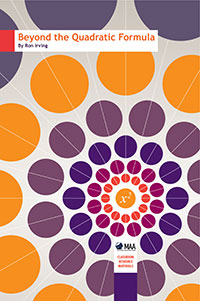
12. Beyond the Quadratic Formula
Ron Irving

13. Combinatorics:
A Guided Tour

David R. Mazur

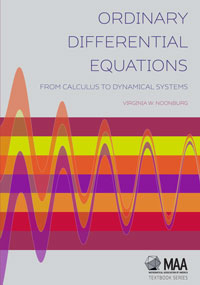
14. Ordinary Differential Equations: From Calculus to Dynamical Systems
Virginia W. Noonburg

15. Functions, Data, and Models
Sheldon P. Gordon and Florence S. Gordon

Friday, August 15, 2014

MAA Books Beat: Teaching Isn't the Only Job for Math Majors

Written by Steve Kennedy, MAA Books Beat is a column written for MAA FOCUS. Teaching Isn't the Only Job for Math Majors appears in the August/September issue.

Teaching Isn’t the Only Job for Math Majors

“What would I do with a math degree? I don’t want to teach.” That anyone would ask this question has flummoxed me for years. When I was younger I was tempted (and sometimes succumbed to the temptation) to explain that one does not study mathematics for its possible future income potential. One studies mathematics because it is mankind’s only portal to absolute truth. Science deals in, as its best, approximations to truth; the humanities in speculation; the arts obscure as much as they reveal. Mathematics, using just the power of your mid, reveals eternal, and external to us, absolute truth.

I’m older now, and hopefully wiser, and not only do I see the value in what science, humanities, and the arts illuminate, but also, I see the legitimacy of the question itself. I too can now talk about the many interesting careers my former students have taken up: Nutty Steph, who started a granola company; Kate, who became a dog-musher leading winter tours of northern Minnesota; Liz, who was Stephen Wolfram’s personal assistant. Unfortunately, as the examples illustrate, I tend to remember the unusual and offbeat options.

Details about “Best Job”
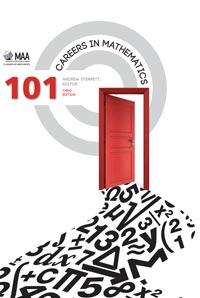

CareerCast recently listed “mathematician” as the Best Job of 2014 (university professor, statistician, and actuary round out the top four). This made a nice blurb in our department newsletter, but they didn’t provide an awful lot of detail about what kind of jobs these folks are looking at. Fortunately, we have Andy Sterrett. Andy has been tracking down mathematics graduates with interesting careers and compiling their stories in 101 Careers in Mathematics for more than a decade. The third edition is just out. I’ll give some highlights to share with your students wondering what to do with a math degree.

Alysia Appell has degrees from Grand Valley State University and Rensselaer Polytechnic Institute. She is in charge of the pilot-staffing model for Northwest/Delta Airlines; that means she needs to forecast the airline’s future needs to hire pilots and plan how to cover all flights given predicted vacations and illnesses of current flight staff.

Joel Schneider has degrees from Franklin and Marshall, Washington State, and the University of Oregon. He was the content director for Square One TV, a children’s TV show that aired in the 1990s. Square One has echoes of Sesame Street but was focused on mathematics. My personal favorite bit was “Mathnet,” a Dragnet parody that featured a detective named Monday who was interested in just the facts as she solved mathematical mysteries. Schneider is still in TV, now producing a mathematical game show called Risky Numbers.

Kay Strain King has degrees from Vanderbilt, Makerere (Uganda), and Texas A&M universities. She is a senior environmental mathematician for Theta Engineering. She does mathematical consulting on environmental problems. In her article in 101 Careers, she describes a project to model gas release from a bermed storage tank under various weather conditions.

I bought a copy of 101 Careers to put in our department’s student reading nook. I’m thinking I should buy another copy for my desk. If you teach and advise undergraduates and sometimes find yourself confronting the question with which I opened this column, you should buy one as well.

(By the way, we have already started collecting material for the next edition of 101 Careers. If you are, or know, someone with an interesting mathematical career, please contact Deanna Haunsperger at dhaunspe@carleton.edu.)

Friday, July 25, 2014

Teaching a Modern ODE Course

Attending MAA MathFest 2014 in Portland, Oregon? Stop by this informational session on teaching a modern ODE course.

Hilton and Executive Tower
22nd Floor
Mount St. Helens Suite
Friday, August 8
3:30pm

The differential equations course has changed radically over the last quarter century.  Easy access to powerful computation has enabled visualization to play a much larger role. The increasing mathematization of the life sciences has greatly expanded the kinds of models available for investigation. The advent of dynamical systems has made new kinds of questions imaginable and accessible. A modern ODE course has to take all this progress into account, though it is perhaps not clear exactly how to do so.  Anne Noonburg―University of Hartford and author of OrdinaryDifferential Equations from Calculus to Dynamical Systems―and Steve Kennedy―Carleton College and MAA Books Sr. Acquisitions Editor―will lead a discussion focused on how best to react to these changes in your ODE course. We will ask such questions as:
  • What is the appropriate role of modeling in the ODE course?
  • How do we balance the needs of physics, biology and engineering majors in the course?
  • What are good sources of deep and interesting models?
  • How much emphasis on numerical methods is appropriate?
  • Similarly how much dynamical systems theory and visualization?
  • What is the appropriate role of technology and what are good choices?
  • Is a Linear Algebra prerequisite necessary, or can the needed material fit in the ODE course?

Friday, July 11, 2014

William Satzer Reviews 101 Careers in Mathematics

William J. Satzer reviewed 101 Careers in Mathematics, 3rd Edition edited by Andy Sterrett as part of MAA Reviews. 

This is a wonderful book, potentially of great value to students and those who advise them. It has some frustrating gaps too, but in a way they also emphasize how useful it is and could be. In brief, this book presents a collection of profiles of people who have (or had) a career that involves some aspect of mathematics. Nearly all the people here have at least one degree in mathematics; the few exceptions have degrees in field like physics, operations research, or a statistics-related area. Short essays at the end of the book discuss the processes of interviewing and finding a job, and what it’s like to work in industry (or, more broadly, outside the academic community).

There are 25 new entries in this new edition that bring the total number of profiles to 146. The “101 Careers” of the title is best regarded as meaning “lots of careers”; even the first edition had more than 101 profiles. Counting careers is also a little funny: they don’t match up one-to-one with people. As many of the profiles demonstrate, many people have more than one career. Indeed it is increasingly uncommon for people to have a single career throughout their lives.

Read the full review here.

Monday, July 7, 2014

New: Mathematicians on Creativity

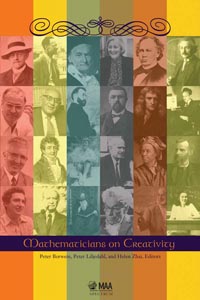
Mathematicians on Creativity

Peter Borwein, Peter Liljedahl, and Helen Zhai, Editors

This book aims to shine a light on some of the issues of mathematical creativity. It is neither a philosophical treatise nor the presentation of experimental results, but a compilation of reflections from top-caliber working mathematicians. In their own words, they discuss the art and practice of their work. This approach highlights creative components of the field, illustrates the dramatic variation by individual, and hopes to express the vibrancy of creative minds at work. Mathematicians on Creativity is meant for a general audience and is probably best read by browsing.


Friday, June 27, 2014

Al Cuoco on Wild About Math

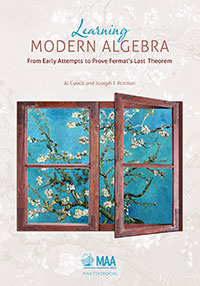
Sol Lederman of Wild About Math interviewed Al Cuoco on his latest book Learning Modern Algebra: From Early Attempts to Prove Fermat's Last Theorem (co-author Joseph Rotman).

Listen to the interview here.


Learning Modern Algebra: From Early Attempts to Prove Fermat's Last Theorem
by Al Cuoco and Joseph Rotman

This book is designed for prospective and practicing high school mathematics teachers, but it can serve as a text for standard abstract algebra courses as well. The presentation is organized historically: the Babylonians introduced Pythagorean triples to teach the Pythagorean theorem; these were classified by Diophantus, and eventually this led Fermat to conjecture his Last Theorem. The text shows how much of modern algebra arose in attempts to prove this; it also shows how other important themes in algebra arose from questions related to teaching. Indeed, modern algebra is a very useful tool for teachers, with deep connections to the actual content of high school mathematics, as well as to the mathematics teachers use in their profession that doesn't necessarily "end up on the blackboard."

Friday, June 6, 2014

MAA Books Beat: Playing to Learn Game Theory

Written by Steve Kennedy, MAA Books Beat is a column written for MAA FOCUS. Playing to Learn Game Theory appears in the June/July 2014 issue.

Playing to Learn Game Theory
by Steve Kennedy

Suppose the graph depicted in figure 1 represents a network of communities. Two doctors are planning to set up practice in one of the nine communities. A practice will attract all the patients in every town closest to it (closest means in terms of number of graph edges joining the vertices). In the case of a distance tie, each doctor will attract half the patients in the town. Where should the doctors locate to ensure their best result? (They are not conspiring; each doctor is acting independently and in ignorance of the other’s choice.)
Of course, neither doctor, presumably desiring to maximize her practice, would choose one of the degree-two vertices. The other six vertices look equally valuable. Suppose Doctor A chooses vertex 2. Were Doctor B to choose any of vertices 3, 5, or 8, each doctor would get 4.5 towns’ worth of business. If Doctor B chooses vertex 6, she “wins” by gaining five towns to A’s four. (If she chooses vertex 7, the payoffs are reversed and A wins five to four.)

If we conceive of the competition as a game between the two doctors, then this game has no Nash equilibrium. Each doctor can guarantee herself only four-ninths of the available customers.

The example comes from the new MAA ebook, Game Theory through Examples by Erich Prisner. The Doctor Locator Game is one of scores of clever, rich, interesting games described and analyzed in this lively text. There are also scores of apps, linked to the etext, so that the reader can play the games, the best way to understand them. In the doctor game, the reader can, with two mouse clicks, choose vertices to represent the doctors’ choices and immediately see a color-coded graph giving the division and the count.

The example games introduce and exposit all the important concepts of game theory. The Doctor Locator Game, on a different graph, introduces the idea of a Nash equilibrium and explains how to find one. The obvious next question of their existence is answered by the above example.

Friday, May 30, 2014

Coming Soon: Mathematicians on Creativity

Mathematicians on Creativity

Peter Borwein, Peter Liljedahl, and Helen Zhai, Editors
Spectrum

This book aims to shine a light on some of the issues of mathematical creativity. It is neither a philosophical treatise nor the presentation of experimental results, but a compilation of reflections from top-caliber working mathematicians. In their own words, they discuss the art and practice of their work. This approach highlights creative components of the field, illustrates the dramatic variation by individual, and hopes to express the vibrancy of creative minds at work.  Mathematicians on Creativity is meant for a general audience and is probably best read by browsing.

Catalog Code: MCT
ISBN: 978-0-88385-574-4
Paperbound, 220 pp.


Friday, May 16, 2014

New eBook: Game Theory through Examples

Game Theory through Examples

by Erich Prisner
Classroom Resource Materials


Game Theory through Examples is a thorough introduction to elementary game theory, covering finite games with complete information.

The core philosophy underlying this volume is that abstract concepts are best learned when encountered first (and repeatedly) in concrete settings. Thus, the essential ideas of game theory are here presented in the context of actual games, real games much more complex and rich than the typical toy examples. All the fundamental ideas are here: Nash equilibria, backward induction, elementary probability, imperfect information, extensive and normal form, mixed and behavioral strategies. The active-learning, example-driven approach makes the text suitable for a course taught through problem solving. Students will be thoroughly engaged by the extensive classroom exercises, compelling homework problems and nearly sixty projects in the text. Also available are approximately eighty Java applets and three dozen Excel spreadsheets in which students can play games and organize information in order to acquire a gut feeling to help in the analysis of the games. Mathematical exploration is a deep form of play, that maxim is embodied in this book.

Friday, May 9, 2014

New in the MAA Store: Ordinary Differential Equations

Ordinary Differential Equations: From Calculus to Dynamical Systems
By Virginia W. Noonburg
List Price: $60.00
MAA Member: $48.00

This book presents a modern treatment of material traditionally covered in the sophomore-level course in ordinary differential equations. While this course is usually required for engineering students the material is attractive to students in any field of applied science, including those in the biological sciences.

The standard analytic methods for solving first and second-order differential equations are covered in the first three chapters. Numerical and graphical methods are considered, side-by-side with the analytic methods, and are then used throughout the text. An early emphasis on the graphical treatment of autonomous first-order equations leads easily into a discussion of bifurcation of solutions with respect to parameters.

The fourth chapter begins the study of linear systems of first-order equations and includes a section containing all of the material on matrix algebra needed in the remainder of the text. Building on the linear analysis, the fifth chapter brings the student to a level where two-dimensional nonlinear systems can be analyzed graphically via the phase plane. The study of bifurcations is extended to systems of equations, using several compelling examples, many of which are drawn from population biology. In this chapter the student is gently introduced to some of the more important results in the theory of dynamical systems. A student project, involving a problem recently appearing in the mathematical literature on dynamical systems, is included at the end of Chapter 5.

A full treatment of the Laplace transform is given in Chapter 6, with several of the examples taken from the biological sciences. An appendix contains completely worked-out solutions to all of the odd-numbered exercises.

The book is aimed at students with a good calculus background that want to learn more about how calculus is used to solve real problems in today's world. It can be used as a text for the introductory differential equations course, and is readable enough to be used even if the class is being "flipped." The book is also accessible as a self-study text for anyone who has completed two terms of calculus, including highly motivated high school students. Graduate students preparing to take courses in dynamical systems theory will also find this text useful.

Order your copy today in the MAA Store.

Friday, April 18, 2014

MAA Books Beat: Extraordinary Book on Ordinary Differential Equations

Written by Steve Kennedy, MAA Books Beat is a column written for MAA FOCUS. Extraordinary Book on Ordinary Differential Equations appears in the April/May 2014 issue.

Mathematics changes slowly; the mathematics curriculum changes even more slowly. A few years ago, to celebrate the tercentenary of L'HĂŽpital's Calculus, some colleagues and I read it seminar-style. The most striking thing about the experience was that his table of contents looked shockingly similar to our departmental calculus syllabus. That being said, in the 30 years I've been teaching collegiate mathematics, there is one course in the undergraduate math curriculum that has changed dramatically–the course in ordinary differential equations (ODE).

These changes are rooted in the calculus reform movement of the late 1980s and early 1990s, the easy access to powerful computing and visualization, and the rise of dynamical systems theory and its accompanying qualitative point of view.

The calc reform movement taught us to explain everything from graphical, numerical, and symbolic perspectives. Computing, of course, made it possible to do this in effective ways, especially the numerical and graphical bits. Dynamical systems provided entirely new ways of thinking about the evolution and bifurcation of systems.

The New on View


All these changes are fully on view in Virginia (“Anne”) Noonburg's Ordinary Differential Equations from Calculus to Dynamical Systems, newly released by the MAA. Noonburg has a distinguished record of research in dynamical systems, especially concentrating on equations that model biological systems. You clearly see these intellectual interests in this book.

Tuesday, April 15, 2014

Undergraduate Mathematics for the Life Sciences

Check out David Bressoud's post Mathematics for the Biological Sciences in his blog Launchings where he discusses one of our latest ebooks, Undergraduate Mathematics for the Life Sciences: Models, Processes, and Directions edited by Glenn Ledder, Jenna P. Carpenter, and Timothy D. Comar.

MAA has just published a Notes volume, Undergraduate Mathematics for the Life Sciences: Models, Processes, and Directions [1] that provides examples and advice for mathematics departments that want to reach out to the growing population of biological science majors.

Biological science majors have replaced prospective engineers as the largest group of students taking regular Calculus I. From the MAA’s Calculus Survey [2], just over 28% of all students in mainstream Calculus I intend to pursue a major in the biological sciences, the largest single group of majors in this course.

Read the full post here.

Friday, April 4, 2014

Mathematics, Magic, and Mystery

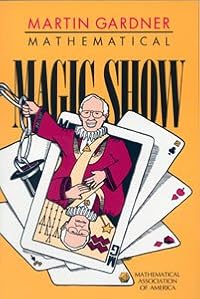
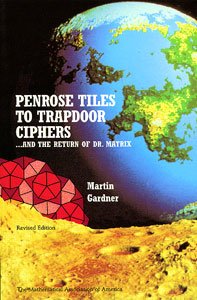
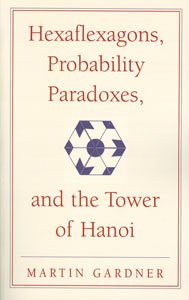
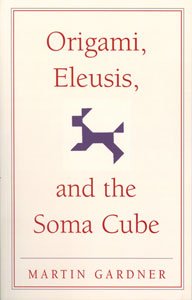
The American Mathematical Society, the American Statistical Association, the Mathematical Association of America, and the Society for Industrial and Applied Mathematics have announced that the theme for Mathematics Awareness Month (MAM), April 2014, is Mathematics, Magic, and Mystery. The theme echoes the title of a 1956 book by renowned math popularizer Martin Gardner, whose extensive writings introduced the public to hexaflexagons, polyominoes, John Conway’s “Game of Life,” Penrose tiles, the Mandelbrot set, and much more. For more than half a century Gardner inspired enthusiasts of all ages to engage deeply with mathematics, and many of his readers chose to pursue it as a career. The year 2014 marks the centennial of Gardner’s birth.

This year the MAM Committee and volunteers have put together 30 theme-related activities. Each day in April one activity will be revealed that corresponds with an image on the theme poster. So stay tuned to mathaware.org to see some behind-the-scenes explanations and videos of Mathematics, Magic, and Mystery!

Martin Gardner in MAA Books


Gardner was perhaps best known as the author of the "Mathematical Games" column for Scientific American, which ran from 1956 to 1981. Throughout his career he wrote more than 70 books and collections of essays on topics ranging from Lewis Carroll and magic tricks to philosophy, religion, and scientific skepticism. Several of his most popular writings are available in the MAA Store.

Eight works by Gardner himself, published between 1999 and 2010, supplemented by 33 chapters written in response to Gardner's work 
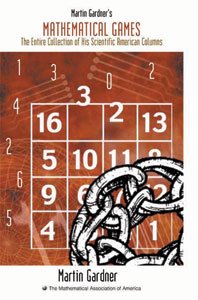
Gardner's Scientific American column "Mathematical Games" on a single, searchable source

Nineteen tantalizing conundrums
Included here are chapters on Conway's surreal numbers, Mandelbrot's fractals, and Smullyan's logic puzzles

The inaugural volume in Martin Gardner's New Mathematical Library. These mathematical recreations delight and perplex while demonstrating principles of logic, probability, geometry, and other fields of mathematics.

The second volume in Gardner's New Mathematical Library, updated chapters, including new game variations, mathematical proofs, and other developments and discoveries, to challenge and fascinate a new generation of readers.

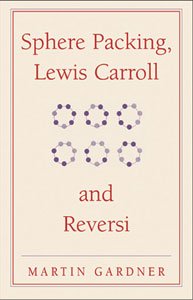
Packing spheres, Reversi, braids, polyominoes, board games, and the puzzles of Lewis Carroll

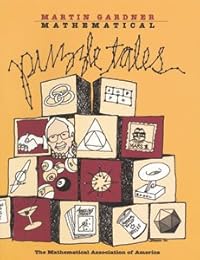
The challenging problems presented here are based on geometry, logarithms, topology, probability, weird number sequences, logic and, virtually every other aspect of mathematics as well as wordplay.

Friday, March 28, 2014

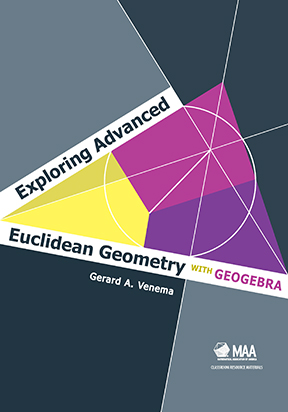
Bill Wood Reviews Exploring Advanced Euclidean Geometry with GeoGebra

Bill Woods reviews Exploring Advanced Euclidean Geometry with GeoGebra by Gerard Venema as part of MAA Reviews.

Exploring Advanced Euclidean Geometry with GeoGebra is written for an inquiry-based approach, with lots of exercises and just enough narrative and historical commentary to hold it all together. It is not the sort of book you read without some paper and probably a computer in front of you. What makes the book special is the inclusion of GeoGebra exercises (clearly identified with a *) to encourage experimentation. Exercises may ask students to construct a visualization of a theorem, verify results, and build examples and conjectures. Eventually the student gets to proving a theorem, but not before playing with the statement quite a bit.

The book focuses on “advanced” planar Euclidean geometry, which the author defines to mean anything developed after Euclid’s Elements. This makes it an excellent candidate text for a second course in Euclidean geometry using inquiry-based methods that minimize lecture and maximize student discovery. There is also much value to be mined as a supplement to other Euclidean geometry texts. The author suggests a structure in which this text is used as something of a lab manual rather than a primary text.

Even if it does not fit for course adoption, this book is worth any geometry teacher’s attention as way to reconnect with the learning experience they want for their students.

Read the full review here.

Friday, March 14, 2014

New eBook: Textbooks, Testing, Training: How We Discourage Thinking

Textbooks, Testing, Training: How We Discourage Thinking

by Stephen S. Willoughby

Willoughby's essay is a gem. It should be in the hands of every young teacher. I wish that I had read it many years ago. I have no doubt that many of his observations and the information he imparts will remain with me for a while. I certainly hope so. A collection of reminiscences from other teachers with their valuable insights and experiences (who could write with such expertise as he does) would make a fine addition to the education literature.
— James Tattersall, Providence College

Steven S. Willoughby has taught mathematics for 59 years and he has seen everything. Some of it has annoyed him, some has inspired him. This little book is something of a valedictory and he shares some parting thoughts as he contemplates the end of his teaching career. Steve has strong, cogent and mostly negative opinions about textbooks, standardized testing, and teacher training. These opinions have been forged in the cauldron of the classroom of a deeply caring teacher. They might not please you, but they ought to make you think. They should spark needed debate in our community. Ultimately this is a human tale with rough parallels to Hardy's Apology; replace "Mathematician's" with "Teacher's" perhaps. Every teacher will sympathize with Steve's frustrations and empathize with the humanity and compassion that animated his life's work and that beat at the center of this book.

Order your copy today in the MAA eBooks Store.
(PDF: $11.00,  POD: $18.00)