Showing posts with label Mathematical Association of America. Show all posts

Friday, November 16, 2012

Celebrating Mandelbrot

Initial image of a Mandelbrot set zoom sequence with a continuously colored environment.
Polish-born French mathematician Benoît B. Mandelbrot was born on November 20, 1924. He is best known as the father of fractal geometry. Although he passed away in 2010, his visionary, maverick approach of harnessing computer power to develop a geometry that mirrors the complexity of the natural world continues to have applications in many practical fields, including education. Two books from the MAA, one by Mandelbrot himself, focus on fractal's role in mathematics and science education. 

Fractals, Graphics, and Mathematics Education by Michael Frame & Benoit Mandelbrot is a collection of essays and sample lessons from educators who began years ago to use fractal geometry in classes that range from second grade elementary school, through public and private high schools, to state universities and private colleges.

The Beauty of Fractals: Six Different Views by Denny Gulick and Jon Scott discusses the broadening domain of fractals from art to scientific application to mathematical analysis. This MAA eBook includes six essays related to fractals, with perspectives different enough to give you a taste of the breadth of the subject. 


    Friday, November 9, 2012

    American Mathematics Contest 8

    The American Mathematics Contest 8 (AMC 8) is a 25 question, 40 minute multiple choice examination in middle school mathematics designed to promote the development and enhancement of problem solving skills. This school year it will be held Tuesday, November 13, 2012.  

    The examination provides an opportunity to apply the concepts taught at the junior high level to problems which not only range from easy to difficult but also cover a wide range of applications. Many problems are designed to challenge students and to offer problem solving experiences beyond those provided in most junior high school mathematics classes.

    Check out our Contest Problem Book series for problems and solutions from past American Mathematics Contests. 


    We encourage all students in grades 6, 7 and 8 to participate in the AMC 8. For more information about the competitions and how your school can get involved, visit AMC's website. 

    Friday, November 2, 2012

    In the Dark on the Sunny Side A Memoir of an Out-of-Sight Mathematician by Larry W. Baggett

    In the Dark on the Sunny Side: A Memoir of an Out-of-Sight Mathematician by Larry W. Baggett is now available in the MAA Store. 

    Misfortune struck on June day in 1944, when a five-year-old boy was forever blinded following an accident he suffered with a paring knife. Few people become internationally recognized research mathematicians and famously successful university professors of that erudite subject, and not surprisingly a minuscule number of those few are visually impaired. In the Dark on the Sunnyside tells the story of one such individual. The author was main-streamed in school long before main-streaming was common. On almost every occasion he was the first blind person involved in whatever was going on - the first blind student enrolled in the Orlando Public School System, the first blind student admitted to Davidson College, and the first blind doctoral student in mathematics at the University of Washington.

    Despite the bad luck that June day, there was good fortune ahead. In addition to all the remarkable people who helped Baggett to join and prosper quite normally in the sighted world, he also had two "inward" outlets that made his life not just easier but gave it meaning, pleasure, and excitement. One was music and the other was mathematics. He may lie awake at night analyzing the chord changes to a jazz tune like "'Round Midnight", or he may be working out the details of the proof of the Spectral Theorem for an unbounded operator.
    In addition to describing the various successes and failures Baggett experienced living in the dark on the sunny side, he displays his love of math and music by interspersing short musings on both topics, such as discussing how to figure out how many dominoes are in a set, the intricacies of jazz chord progressions, and the mysterious Comma of Pythagoras.


    Get your copy of In the Dark on the Sunny Side: A Memoir of an Out-of-Sight Mathematician by Larry W. Baggett  in the MAA Store. 

    Friday, October 26, 2012

    Coming Soon! Martin Gardner in the Twenty-First Century


    Martin Gardner enormously expanded the field of recreational mathematics with the Mathematical Games columns he wrote for Scientific American for over 25 years and the more than 70 books he published. He also had a long relationship with the Mathematical Association of America, publishing articles in the MAA journals right up to his death in 2010. This book collects articles Gardner wrote for the MAA in the twenty-first century, together with other articles the MAA published from 1999 to 2012 that spring from and comment on his work.

    Martin Gardner's interests spanned geometry, number theory, graph theory, and probability, always communicated with engaging exposition often including games and puzzles. Eight works by Gardner himself, published between 1999 and 2010, are collected here and represent the breadth of his work, including his short fiction and lifelong interest in debunking pseudo-science. The remaining 33 chapters were written in response to Gardner's work and include several articles addressing open questions he posed. They come from The American Mathematical Monthly, Mathematics Magazine, The College Mathematics Journal, and Math Horizons and demonstrate how Gardner's influence continues beyond his columns for Scientific American.

    Although he took no mathematics in college, Martin Gardner inspired many mathematicians, professional and amateur, and his work was informed by frequent correspondence with other mathematics aficionados, both famous and unknown. He was even the basis for a character in a popular novel; his review of that work in included here. This book is a tribute to the deep and lasting impact of this prolific and brilliant writer. It is for anyone who, like Martin Gardner, loves mathematics.


    Martin Gardner in the Twenty-First Century is edited by Michael Henle and Brian Hopkins. Look for this book coming soon to the MAA Store.

    Friday, October 19, 2012

    Celebrating Martin Gardner

    Longtime acclaimed mathematics and science writer Martin Gardner was born on October 21. Every October, on and around his birthday, Celebrations of Mind are held all over the globe. These events are aimed at curious people of all ages, and intended to provide an opportunity to celebrate the things he made so many people think about for many decades: recreational math, puzzles, optical illusions, rationality, skepticism, and much more. 

    The MAA will be hosting a Gardner event on December 5, 2012. James Tanton will present "Weird Ways to Work with Pi”, a talk that will explore some weird and wonderful ways to play with pi for shapes that might or might not be circles.


    Gardner was perhaps best known as the author of the "Mathematical Games" column for Scientific American, which ran from 1956 to 1981. Throughout his career he wrote more than 70 books and collections of essays on topics ranging from Lewis Carroll and magic tricks to philosophy, religion, and scientific skepticism. Several of his most popular writings are available in the MAA Store. 


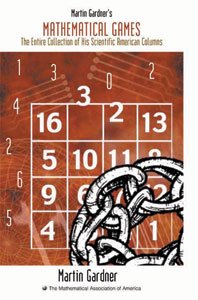
    Martin Gardner's "Mathematical Games"
    Gardner's Scientific American column "Mathematical Games" on a single, searchable source

    aha! Gotcha / aha! Insight
    144 wonderful puzzles from the reigning king of recreational mathematics.

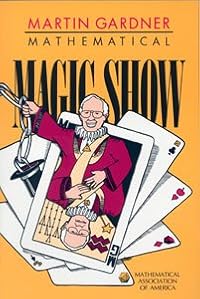
    Mathematical Magic Show
    Nineteen tantalizing conundrums.
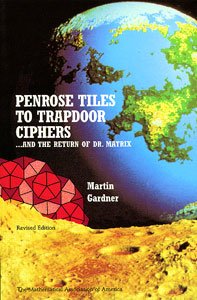
    Penrose Tiles to Trapdoor Ciphers
    Included here are chapters on Conway's surreal numbers, Mandelbrot's fractals, and Smullyan's logic puzzles.

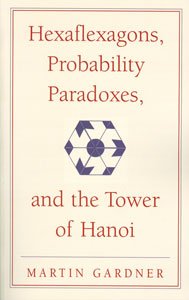
    Hexaflexagons, Probability Paradoxes, and the Tower of Hanoi
    The inaugural volume in Martin Gardner's New Mathematical Library. These mathematical recreations delight and perplex while demonstrating principles of logic, probability, geometry, and other fields of mathematics.

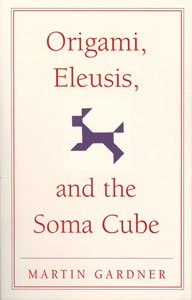
    Origami, Eleusis, and the Soma Cube
    The second volume in Gardner's New Mathematical Library, updated chapters, including new game variations, mathematical proofs, and other developments and discoveries, to challenge and fascinate a new generation of readers.

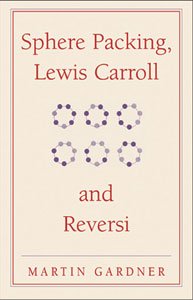
    Sphere Packing, Lewis Carroll, and Reversi
    Packing spheres, Reversi, braids, polyominoes, board games, and the puzzles of Lewis Carroll.

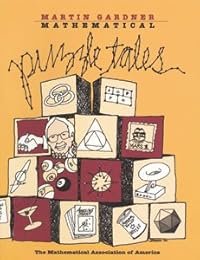
    Mathematical Puzzle Tales
    The challenging problems presented here are based on geometry, logarithms, topology, probability, weird number sequences, logic and virtually every other aspect of mathematics as well as wordplay.

    Friday, October 12, 2012

    New Book: Explorations in Complex Analysis

    Explorations in Complex Analysis by Michael A. Brilleslyper, Michael J. Dorff, Jane M. McDougall, James S. Rolf, Lisbeth E. Schaubroek, Richard L. Stankewitz, and Kenneth Stephenson. 

    Available in the MAA Store and the MAA eBook Store.

    Read the introduction of Explorations in Complex Analysis (pdf)

    Explorations in Complex Analysis is written for mathematics students who have encountered basic complex analysis and want to explore more advanced projects and/or research topics. It could be used as

    • a supplement for a standard undergraduate complex analysis course, allowing students in groups or as individuals to explore advanced topics,
    • a project resource for a senior capstone course for mathematics majors,
    • a guide for an advanced student or a small group of students to independently choose and explore an undergraduate research topic, or
    • a portal for the mathematically curious, a hands-on introduction to the beauties of complex analysis.
    Research topics in the book include complex dynamics, minimal surfaces, fluid flows, harmonic, conformal, and polygonal mappings, and discrete complex analysis via circle packing. The nature of this book is different from many mathematics texts: the focus is on student-driven and technology-enhanced investigation. Interlaced in the reading for each chapter are examples, exercises, explorations, and projects, nearly all linked explicitly with computer applets for visualization and hands-on manipulation.

    There are 16 Java applets and a Java application, CirclePack, that allow students to explore the research topics without purchasing additional software. The electronic version of the book contains links to the applets and CirclePack. The print book (available soon in the MAA Store) contains information for downloading everything.

    Find this book in the MAA Store and the MAA eBook Store.

    Friday, September 14, 2012

    New Book: Mathematics Galore!

    New in the MAA Store is Mathematics Galore! The First Five Years of the St. Mark's Institute of Mathematics by James Tanton.

    Mathematics Galore! Showcases some of the best activities and student outcomes of the St. Mark’s Institute of Mathematics and invites you to engage the mathematics yourself! Revel in the delight of deep intellectual play and marvel at the heights to which young scholars can rise. See some great mathematics explained and proved via natural and accessible means.
     
    Based on 26 essays (“newsletters”) and eight additional pieces, Mathematics Galore! offers a large sample of mathematical tidbits and treasures, each immediately enticing, and each a gateway to layers of surprising depth and conundrum. Pick and read essays in no particular order and enjoy the mathematical stories that unfold. Be inspired for your courses, your math clubs and your math circles, or simply enjoy for yourself the bounty of research questions and intriguing puzzlers that lie within. 


    Look for Mathematics Galore! in the MAA Store.

    Friday, August 17, 2012

    Happy Birthday, Pierre de Fermat!

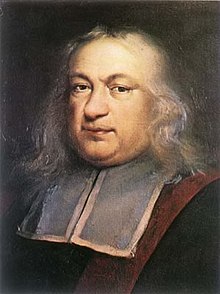
    Image via Wikipedia
    Pierre de Fermat (pictured), according to many sources, was born on this day in 1601 in Beaumont-de-Lomagne, France (link). But was this really his birthday? 

    Fermat was a lawyer and French government official who spent his spare time doing mathematics. He made important contributions to the foundations of differential calculus, but is most remembered for his work in number theory; in particular for Fermat's Last Theorem. "One day in 1637, while perusing his copy of an ancient Greek text by the 3rd century mathematician Diophantus, Fermat jotted a note in the margins that would drive mathematicians crazy for the next four centuries," wrote Eoin O'Carroll in an article for The Christian Science Monitor. 


    Fermat wrote: "It is impossible to separate a cube into two cubes, or a fourth power into two fourth powers, or in general, any power higher than the second, into two like powers. I have discovered a truly marvelous proof of this, which this margin is too narrow to contain."
    Read O'Carroll's article to find out more about what The Guinness Book of World Records listed as the "World's Most Difficult Math Problem". 
    Want to read more about Pierre de Fermat? Try these books found in the MAA Bookstore.


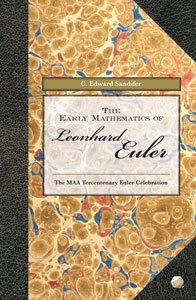
    The Early Mathematics of Leonhard Euler

    This series contains some of Euler's greatest mathematics including his first proof of the Euler-Fermat theorem.


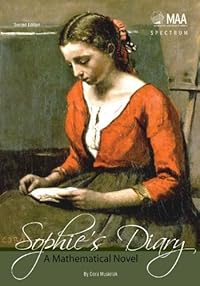
    Sophie's Diary: A Mathematical Novel

    A novel about Sophie Germain, the first and only woman in history to make a substantial contribution to the proof of Fermat's Last Theorem.


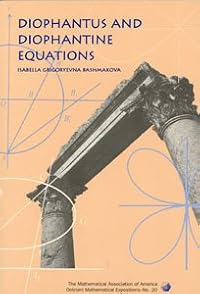
    Diophantus and Diophantine Equations

    This book includes substantial descriptions of the relevant contributions of Viéte, Fermat, Euler, Jacobi, and Poincaré.


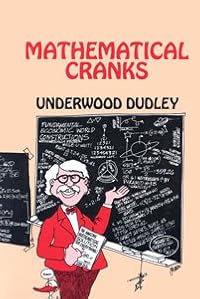
    Mathematical Cranks

    Underwood Dudley's collection of humorous mathematical stories.

    Friday, July 27, 2012

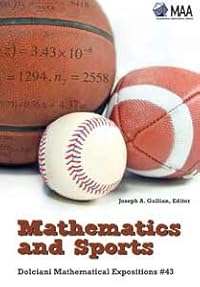
    Mathematics and Sports

    In celebration of the 2012 Summer Olympic Games, today's post will highlight the connection between mathematics and the games. 


    Edited by past MAA President Joseph Gallian, Mathematics and Sports is an eclectic compendium of the essays solicited for the 2010 Mathematics Awareness Month. In keeping with the goal of promoting mathematics awareness to a broad audience, all of the articles are accessible to college level mathematics students and many are accessible to the general public. The articles provide source material for classroom use and student projects. Many students will find mathematical ideas motivated by examples taken from sports more interesting than the examples selected from traditional sources.
    Get your copy of Mathematics and Sports in the MAA Bookstore.


    Friday, July 13, 2012

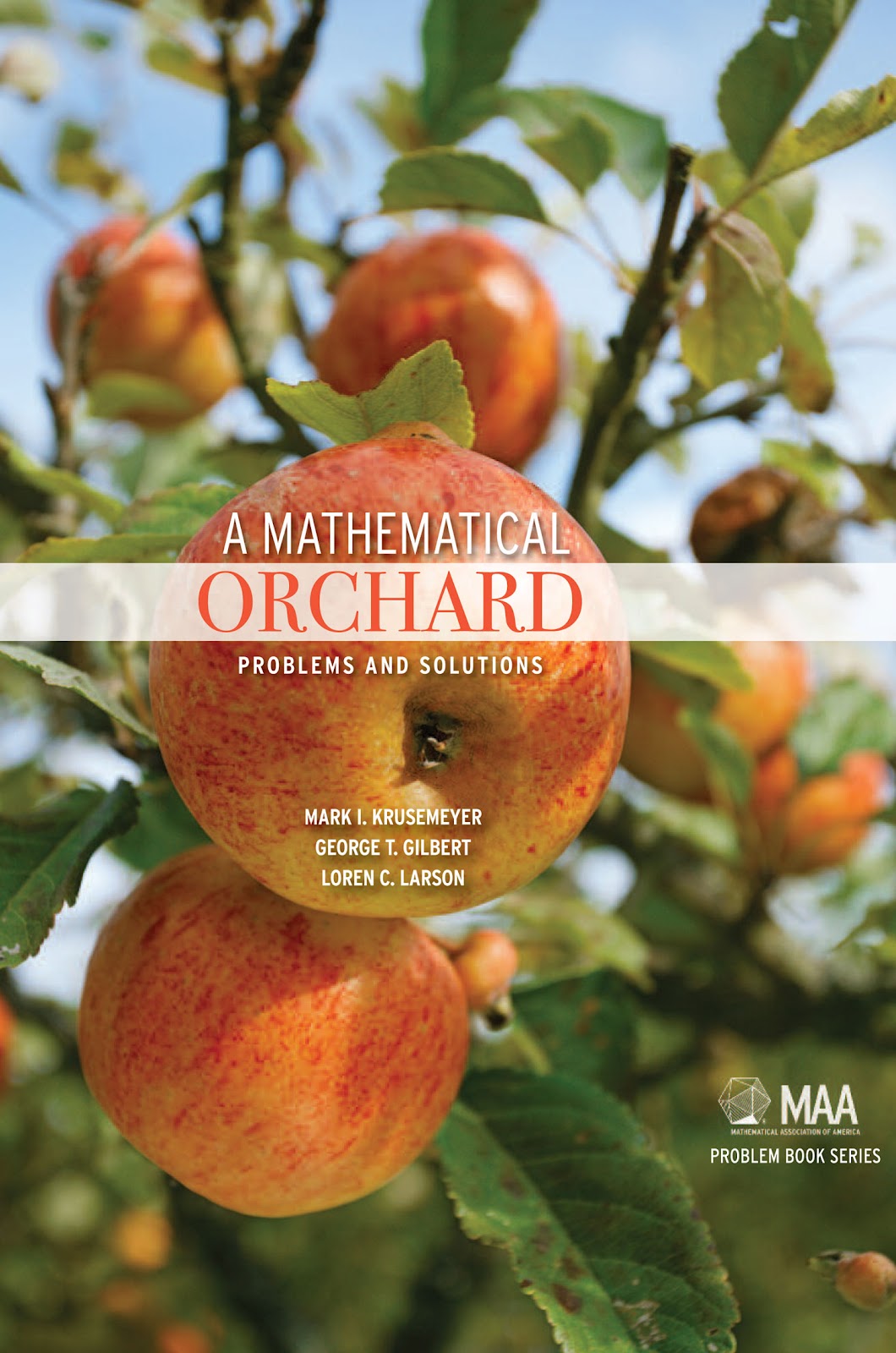
    A Mathematical Orchard: Now Available in Paperback


    A Mathematical Orchard: Problems and Solutions by Mark I. Krusemeyer, George T. Gilbert, and Loren C. Larson is now available as a paperback in the MAA Book Store. 

    A collection of 208 challenging, original problems with carefully worked solutions. In addition to problems from The Wohascum County Problem Book, there are about 80 new problems, many of which involve experimentation and pattern finding.

    The problems are intended for undergraduates; although some knowledge of linear or abstract algebra is needed for a few of the problems, most require nothing beyond calculus. In fact, many of the problems should be accessible to high school students. On the other hand, some of the problems require considerable mathematical maturity, and most students will find few of the problems routine.

    Over four-fifths of the book is devoted to presenting instructive, clear, and often elegant solutions. For many problems, multiple solutions are given. Appendices list the prerequisites for individual problems and arrange them by topic. This should be helpful to classes on problem solving and to individuals or teams preparing for contests such as the Putnam. The index can help, as well, in finding problems with a specific theme, or in recovering a half-remembered problem.

    This book is also available in the MAA eBook Store. Don't forget to check out our July eBooks Sale. It's our biggest sale ever! 


    Friday, June 29, 2012

    Beckenbach Book Prize


    The Beckenbach Book Prize, established in 1986, is the successor to the MAA Book Prize established in 1982. It is named for the late Edwin Beckenbach, a long-time leader in the publications program of the Association and a well-known professor of mathematics at the University of California at Los Angeles. The Prize of $2,500 is intended to recognize the author(s) of a distinguished, innovative book published by the MAA and to encourage the writing of such books. The award is not given on a regularly scheduled basis.


    Below are the most recent winners of the Beckenbach Book Prize. A full list of winners is available here. 


    by Dan Kalman

    This book presents an assortment of topics that extend the standard algebra-geometry-calculus curriculum of advanced secondary school and introductory college mathematics. It is intended as enrichment reading for anyone familiar with the standard curriculum, including teachers, scientists, engineers, analysts, and advanced students of mathematics. 


    by Nathan Carter

    Group theory is the branch of mathematics that studies symmetry, found in crystals, art, architecture, music, and many other contexts. Visual Group Theory assumes only a high school mathematics background and covers a typical undergraduate course in group theory from a thoroughly visual perspective. The more than 300 illustrations in Visual Group Theorybring groups, subgroups, homomorphisms, products, and quotients into clear view. 


    by William Dunham 

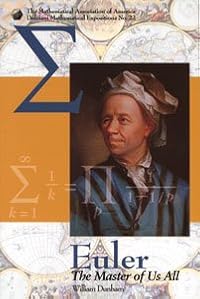
    Without question, Leonhard Euler (1707-1783) ranks among history's greatest mathematicians. Over six decades of unmatched productivity, and despite a visual impairment that grew ever worse, charted the course of mathematics throughout the eighteenth century and beyond. His reputation is captured in Laplace's famous admonition, "Read Euler, read Euler. He is the master of us all." Written for the mathematically literate reader, this book provides a glimpse of Euler in action. 


    by Arthur Benjamin and Jennifer Quinn

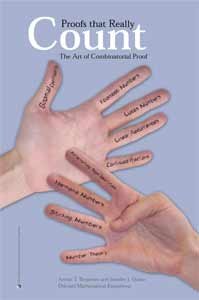
    Mathematics is the science of patterns, and mathematicians attempt to understand these patterns and discover new ones using a variety of tools. In Proofs That Really Count, award-winning math professors Arthur Benjamin and Jennifer Quinn demonstrate that many number patterns, even very complex ones, can be understood by simple counting arguments. 

    Friday, June 8, 2012

    June Sale in the MAA eBooks Store!

    The following titles are on sale now in the MAA eBook Store:

    Charming Proofs by Claudi Alsina and Roger Nelsen
    Regular price: $37.50
    Sale price: $30.00


    A Historian Looks Back by Judith V. Grabiner
    Regular price: $37.50
    Sale price: $30.00

    Complex Analysis: A Geometric Viewpoint by Steven G. Krantz
    Regular price: $25.00
    Sale price: $20.00

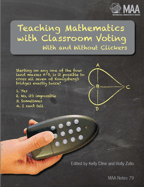
    Teaching Mathematics with Classroom Voting: With and Without Clickers edited by Kelly Cline and Holly Zullo
    Regular price: $27.50
    Sale price: $22.00


    Use coupon code 1930249303 to receive 10% off your entire purchase. This coupon is good only in the eBooks Store.


    Offer Expires:  June 30, 2012

    Friday, May 25, 2012

    A Mathematical Orchard and the End of May Sale

    The latest addition to the MAA eBook store is A Mathematical Orchard: Problems and Solutions by Mark I. Krusemeyer, George T. Gilbert, and Loren C. Larson.


    A collection of 208 challenging, original problems with carefully worked solutions. In addition to problems from The Wohascum County Problem Book, there are about 80 new problems, many of which involve experimentation and pattern finding.

    The problems are intended for undergraduates; although some knowledge of linear or abstract algebra is needed for a few of the problems, most require nothing beyond calculus. In fact, many of the problems should be accessible to high school students. On the other hand, some of the problems require considerable mathematical maturity, and most students will find few of the problems routine.

    Over four-fifths of the book is devoted to presenting instructive, clear, and often elegant solutions. For many problems, multiple solutions are given. Appendices list the prerequisites for individual problems and arrange them by topic. This should be helpful to classes on problem solving and to individuals or teams preparing for contests such as the Putnam. The index can help, as well, in finding problems with a specific theme, or in recovering a half-remembered problem.

    Get your copy of A Mathematical Orchard: Problems and Solutions in the MAA eBook Store*. 


    Use coupon code 1874812752 to receive 10% off your entire purchase in MAA eBook Store. 


    Offer Expires:  May 31, 2012

    *A paperback version of this book will be available shortly in our regular bookstore.


    Friday, May 11, 2012

    May Sale in the MAA eBooks Store!

    The following titles are on sale now in the MAA eBook Store:

    Randomness and Recurrence by Rodney Nillsen
    Regular price: $38.00        
    Sale price: $34.00


    Harmony of the World: 75 Years of Mathematics Magazine
    Edited by Gerald Alexanderson with the assistance of Peter Ross
    Regular price: $30.00        
    Sale price: $25.00 

    Sink or Float? Thought Problems in Math and Physics 
    by Keith Kendig
    Regular price: $37.50        
    Sale price: $32.00


    Recent Developments on Introducing a Historical Dimension in Mathematics Education
    Edited by Victor Katz and Constantinos Tzanakis
    Regular price: $32.50        
    Sale price: $29.25


    Use coupon code  1874812752  to receive 10% off your entire purchase. 


    Offer Expires:  May 31, 2012

    Friday, May 4, 2012

    Bressoud Reviews MAA's Calculus: Modeling and Application Interactive Textbook

    MAA Past President David Bressoud reviewed Calculus: Modeling and Application, 2nd Edition in his May Launchings Column. Bressoud has been using the MAA online textbook to teach Single Variable Calculus at Macalester College. 


    "One of the greatest benefits of online textbooks is the ability to embed links to definitions, animations, and software programs. Smith and Moore’s textbook is liberally sprinkled with links to explorations that are available in Maple, Mathcad, and Mathematica. There also are links to WeBWorK, where a library of problems linked to the sections of their book is available. "


    Read the full column "Are Textbooks Better Online?"


    Calculus: Modeling and Application, 2nd Edition, by David A. Smith and Lawrence C. Moore of Duke University, responds to advances in technology that permit the integration of text and student activities into a unified whole. In this approach, students can use mathematics to structure their understanding of and investigate questions in the world around them, to formulate problems and find solutions, then to communicate their results to others.

    This interactive textbook covers two semesters of single-variable calculus. Its features include use of real-world contexts for motivation, guided discovery learning, hands-on activities (including built-in applets), a problem-solving orientation, encouragement of teamwork, written responses to questions, tools for self-checking of results, intelligent use of technology, and high expectation of students.

    Friday, April 27, 2012

    Alex Bogomolny Reviews Beautiful Mathematics

    The following review was published as an MAA Review in March 2012.


    "There is probably no mathematician who has never been surprised by a mathematical statement or has not been delighted in a mathematical argument. For those who know, mathematics has beauty, elegance, mystery, and, of course, surprise. Most mathematicians chose this endeavor after having experienced such a moment of enlightenment. Beautiful Mathematics offers ample opportunity for such an experience to everyone with even a slightest interest in mathematics..."

    Read the full review here.


    Find out how you can become a reviewer for MAA Reviews by visiting MAA Reviews | Ways You Can Help. 


    Beautiful Mathematics is available as an MAA eBook and in the Amazon-Powered MAA Bookstore. 

    Friday, April 20, 2012

    Mathematics of Planet Earth 2013


    Mathematics of Planet Earth 2013 logo

    MAA is a participating partner in Mathematics of Planet Earth 2013, a year-long program to publicize and promote the role of mathematics in developing a better understanding of dynamic processes affecting Planet Earth, ranging from geophysical systems governing climate to economic and financial activity.

    The following titles are related to the Mathematics of Planet Earth theme and can be found in the MAA Store.


    Friday, April 13, 2012

    Sophie’s Diary: A Mathematical Novel


    Sophie’s Diary: A Mathematical Novel is a work of fiction inspired by French mathematician Sophie Germain. It chronicles the coming of age of a teenager learning mathematics on her own, growing up during the most turbulent years of the French Revolution. The fictionalized diary uses mathematics, intertwined with historically-accurate accounts of the social chaos that reigned in Paris between 1789 and 1794, to describe the learning journey of a remarkable girl that became the first and only woman in history to make a substantial contribution to the proof of Fermat’s Last Theorem.

    Sophie Germain was born in Paris in 1776. Little is known about her childhood or about her initiation into mathematics. Her first biographers wrote that, as a young woman, she assumed the name of a male student at the École Polytechnique to submit her own work to Lagrange. Yet, no biography has explained how Germain studied mathematics before that time to encourage such boldness. Sophie’s Diary is an attempt to put in perspective how a self-taught girl could have acquired the knowledge to enter the world of Lagrange’s analysis.

    Available as an MAA eBook and hardbound


    MAA Author Dora Musielak talks about her motivation for writing  Sophie’s Diary and future projects below.


    Sophie Germain performed a most exhilarating and audacious feat to break into the world of mathematics. Using the name of a male student she submitted her own analysis to the great mathematician Lagrange, a professor at the École Polytechnique. This was at the end of the eighteenth century in Paris; women were not allowed in the French universities and were discouraged from pursuing studies in sciences. Sophie, a young woman of 20 or 21 dazzled the Parisian intellectual community with her intelligence, seriousness, and an unyielding passion for mathematics. Working mostly on her own, Germain went on to make substantial contributions to two of the most challenging mathematical problems of her time: Fermat's Last Theorem and the theory of elasticity.

    No biography has ever explained how Germain learned mathematics before she sent her work to Lagrange. It is believed that she had no tutors while growing up. Some biographies imply that once she was discovered, she learned from the scattered material and problems she received from several individuals, including Lagrange. That did not make sense to me, since she had submitted a mathematical report to Lagrange before they all learned about her. I conjectured that Sophie must have studied mathematics before in order to have had the required knowledge not just to understand but to write her observations on Lagrange's lecture notes.

    The idea of Sophie's Diary germinated in my mind with that premise. I began to write as if I were her as a teenager, weaving mathematics into her thoughts and daily routines. And since the French Revolution burst in when Sophie was 13, the fiction aspect of the story was centered on that social chaos. I concentrated in the years between 1789 and 1794, her formative years. I imagined how the teenage Sophie could have learned mathematics on her own. Not having a tutor to guide her, the math concepts were chosen at random, imagining an inquisitive girl reading any book she could find and solving every problem she thought was necessary or that appealed to her hunger for mathematics.

    I didn't want the mathematics to have the rigour of a textbook, after all, a diary is not meant to teach anyone but rather to record a person's thought process. None of the personal events portrayed in Sophie’s Diary pertain to the real Sophie Germain. I do not know whether in the years between 1789 and 1794 she studied the topics I incorporated or met any of the mathematicians who appear in my fictional story. Nonetheless, I used factual material pertaining to the history of mathematics. In Sophie’s Diary there are plenty of references to the ancient mathematicians and to the works of Fermat, Euler, Newton, the Bernoullis, Châtelet, Agnesi and many others to justify the portrayal of a self-educated young woman that satisfies her desire to learn by reading about past scholars. Sophie's Diary is thus a perfect blend of mathematics and history of mathematics.

    In writing Sophie’s Diary, my objective was to put in perspective how Germain could have developed the strategies to pursue her own mathematical research later on. I wanted to convey the frustration of not knowing, the eagerness to solve more equations, and the joy upon mastering a subject. I wanted to show that learning mathematics requires not just the aptitude but also discipline, concentration and passion. What I wanted most of all was to put into context the environment surrounding the young Sophie Germain.

    Sophie’s Diary will appeal to many readers, including those interested in the history of mathematics, and especially in the contributions of women scientists. The book can be an important complement to courses on the history of mathematics. And it can also be of interest to those studying the work of Sophie Germain because, although the portrayal of her adolescence is imagined, it puts in perspective the time and culture that shaped this uniquely gifted mathematician.

    I am convinced that young readers will find inspiration in Sophie's Diary. Although we have made great strides in attracting more women into mathematics and science careers we still need positive role models. I believe my book can be an invaluable resource and encouragement for both students and teachers. Reading about Sophie Germain can be uplifting, because she defied convention and overcame all obstacles to pursue an education when the doors of the universities were shut to women. Hers is a truly amazing story, and I hope more young women learn about Sophie and derive strength from reading about her self-study and her passion for mathematics. This is reason enough to make Sophie's Diary relevant to today's mathematics education.

    What is unique about my book is the balance it keeps between fiction, history, and mathematics. The topics of mathematics include algebra, number theory, and  calculus. Therefore, high school students may find the material easily accessible.

    Please note this MAA book is a new edition. The first edition of Sophie's Diary appeared several years ago and it was a huge success. Yet, I felt it needed improvement and thus I rewrote many pages, corrected typographic errors, and expanded the story to incorporate some topics of variational calculus. To present a valid historical perspective, I wrote a more extensive biographical sketch on Sophie Germain with factual data about her work. I also added a note with referenced sources to shed light in some real events and to dispel some misconceptions about her rise to fame.

    I am currently working on a university textbook. After concluding this project I want to write about the mathematical theories that were developed by Euler and Lagrange. I expect to continue promoting the history of women in science and mathematics to inspire young women. Thus, it'd be satisfying to write another book to serve this purpose. Another mathematical novel? Maybe, why not? I have some interesting ideas....
    Available as an MAA eBook and hardbound